For Immediate Release, April 30, 2026
Contact: Michael Robinson, Center for Biological Diversity, (575) 313-7017, michaelr@biologicaldiversity.org
Cyndi Tuell, Western Watersheds Project, (520) 272-2454, cyndi@westernwatersheds.org
Endangered Mexican Wolf Crosses From New Mexico Into Chihuahua
Border Wall Construction Could Sever Link Between Populations
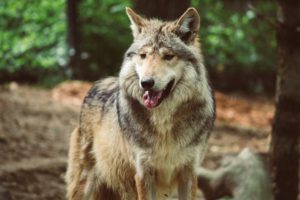
SILVER CITY, N.M.— For the first time in decades, a radio-collared wolf last week relocated from the United States into Mexico. The wolf, dubbed “Cedar,” crossed through the last stretch of southern New Mexico without a border wall in the remote Bootheel region. U.S. Customs and Border Protection has begun extending the wall where Cedar crossed, which would block wildlife in the future.
“Cedar could be the last lobo to truly roam freely if Trump completes his destructive border wall,” said Michael Robinson, a senior conservation advocate at the Center for Biological Diversity. “Since time immemorial, wolves effortlessly loped through these borderless desert grasslands with eyes open for deer and jackrabbits and snouts sniffing for other wolves. Sealing off the Bootheel would isolate wolves and other rare mammals like jaguars and ultimately make them all less likely to survive.”
Cedar is an adult male who earned his name for a two-week sojourn in New Mexico’s Cedar Mountains on his way southward. He now has the opportunity to find a mate in Mexico where wolves were reintroduced in 2011.
Having wild wolves from the United States and Mexico populations mating together could increase the wolves’ critically low genetic diversity on both sides of the border.
“It is so exciting to know that Cedar was able to find his way south into Mexico in search of the things he needs to thrive,” said Cyndi Tuell, the Arizona and New Mexico director at Western Watersheds Project. “His adventures highlight the need to maintain connectivity between the United States and Mexican populations of lobos and the need for all of us to push back on the devastating plans of the current administration to cut the North American continent in half with more border walls and barriers.”
Cedar was born in Arizona to the Rocky Prairie Pack and is the younger brother of Asha, famed for twice traveling north of Interstate 40 in New Mexico. Asha was twice captured for traveling out of bounds before she settled at the eastern edge of the Gila National Forest after her most recent release with her captive-born family in 2025.
Background
In 2017, before there was an extensive border wall, two wolves from Mexico separately crossed into the United States. The first was a male who briefly visited the edge of Las Cruces, New Mexico, before returning to Mexico. The second was a female who crossed north into Arizona and was captured a few days later and kept in captivity.
In 2021 that female wolf’s captive-born but released son, Mr. Goodbar, traveled to the same part of the border near Las Cruces that the male wolf had freely crossed four years earlier. Instead of being able to cross, Mr. Goodbar encountered the border wall, which he paced for four days before giving up and returning north to the Gila National Forest, where he lives today.
In 2022 a pair of wolves from Mexico established a binational range in the Bootheel and the adjoining areas of Mexico. The male was illegally killed while the female was later captured and released this month in Durango.
The Center for Biological Diversity is a national, nonprofit conservation organization with more than 1.8 million members and online activists dedicated to the protection of endangered species and wild places.
Western Watersheds Project is a non-profit environmental conservation group founded in 1993, that works to improve public lands management throughout the western United States in order to protect native species and conserve and restore the habitats they depend on.