For Immediate Release May 11, 2026
Contact(s):
- Josh Osher, Western Watersheds Project, (406) 220-2883, josh@westernwatersheds.org
- Chris Krupp, WildEarth Guardians, (206) 417-6363, ckrupp@wildearthguardians.org
- Chandra Rosenthal, PEER, (303) 898-0798, crosenthal@peer.org
White House Unveils Rule to Strip Oversight from Public Lands Grazing Program
WASHINGTON – Today, the White House released a proposed rule that would overhaul the Bureau of Land Management’s grazing regulations, reviving and advancing a controversial effort that would weaken government oversight on 155 million acres of public land across the West. Of all the commercial uses that harm public lands, livestock grazing affects the largest acreage by far, and is the leading cause of species endangerment on western public lands.
Despite the sweeping scope of the proposed changes, the administration is attempting to move the rule forward without preparing a full Environmental Impact Statement examining the cumulative impacts to wildlife, watersheds, land health and public oversight.
Conservation groups condemned the proposal as a sweeping rollback of environmental safeguards that will undermine federal management of livestock, reduce public accountability, and accelerate damage to public lands across the West.
“The federal grazing program is in crisis, and today’s proposed rule changes will make ecologically-appropriate land management even harder,” said Josh Osher, public policy director for Western Watersheds Project. “These regulations are a handout to a special interest industry seeking control over vast stretches of public land at taxpayer expense, while wildlife, watersheds, and the public bear the costs.”
Key elements of the Trump Administration’s proposed rule include:
- Removing opportunities for the American public to participate in grazing decisions on public lands;
- Mandating maximized extractive grazing uses on public lands without additional environmental review;
- Illegally redefining livestock after over 100 years of law and policy, making it impossible to graze bison or other native species for restoration of public lands; and
- Shifting the blame for poor land health conditions to wild horses, drought, and other factors while downplaying the documented impacts of livestock grazing.
“It’s galling that the agency is claiming that among the reasons for revising the regulations is that grazing permittees have been ‘shouldering a disproportionate share of the burden’ in ensuring achievement of rangeland health,” said Chris Krupp, Public Lands Attorney for WildEarth Guardians. “For one, grazing is by far the most prevalent use of BLM-managed public lands, so it makes great sense to focus on grazing to improve range lands. But the bigger issue is that the agency has not in fact ‘burdened’ public lands ranchers. The agency already bends over backwards to appease them, at great cost to public lands. The proposed regs will simply make ranchers more unaccountable to the public.”
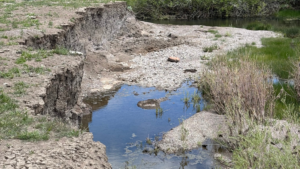
The most recent data analyzed by Public Employees for Environmental Responsibility (PEER) show that millions of grazed Bureau of Land Management acres fail basic land health standards, with livestock grazing identified as the leading cause. The impacts are visible across the West, from degraded streams and polluted water sources to the loss of native vegetation and the killing of native predators whose habitat is used for private livestock grazing.
“The gutting of the grazing regulations reflects the Trump Administration’s war on science and evidence based decision making,” said Chandra Rosenthal, Public Lands Director for PEER. “Coupled with the drastic reductions in staffing levels to monitor and manage grazing, our public lands will continue to suffer.”
The new rule would give the agency two and a half years to take action once grazing allotments are found to be failing the Land Health Standards, instead of requiring action before the next grazing season, as the current regulations require.
“If livestock grazing is so heavy, and so mismanaged, that you can’t meet the already-low bar for land health, and are in failing status, then allowing the livestock grazing that created those impacts to continue for several years is a recipe for ecosystem destruction, the invasion of flammable weeds, and the decimation of native habitats and the wildlife populations that depend on them,” Osher said.
In 2006, the Bureau of Land Management attempted similar revisions to grazing regulations, but those efforts were struck down in federal court for violating bedrock environmental laws, including the National Environmental Policy Act and the Endangered Species Act.
Recent investigations by High Country News and ProPublica have found that roughly two-thirds of public lands grazing is controlled by just 10 percent of permittees, including large corporate and billionaire-owned operations, while contributing less than 2 percent of the nation’s beef supply.
Today’s proposal doubles down on a program that is already producing the opposite of what Americans expect from their public lands. Polling from the 2026 Conservation of the West polling shows strong bipartisan support for protecting clean water, wildlife habitat, and natural ecosystems on public lands. This rule moves away from those priorities, not toward them, by reducing oversight of the single largest commercial use of federal lands.
“This proposed rule is a slap in the face to the public that invested countless hours in helping to thoughtfully reform the public lands grazing program under the first Trump Administration,” said Osher. “Instead, the new rules are being rubber-stamped for the benefit of the livestock industry without even analyzing its consequences.”
###