For Immediate Release: January 13, 2026
Media Contacts:
Mike Garrity, Executive Director, Alliance for the Wild Rockies, 406-410-3373
Laura Welp, Vegetation Projects Specialist, Western Watersheds Project, 435-899-0204
Steve Kelly, Director, Council on Wildlife and Fish, 406-920-1381
Conservation Groups Sue Bureau of Land Management for Decision Authorizing Massive Destruction Across 905,000 acres in Southwest Montana
DILLON, Mont. – A new complaint was filed in federal court yesterday that challenges the Bureau of Land Management’s (BLM’s) decision to authorize forest destruction, herbicide spraying, and heavy grazing across 905,000 acres in southwest Montana. The project on the Dillon Field Office stretches across multiple mountain ranges, including the Pioneer Mountains, Tobacco Root Mountains, Gravelly Range, and Centennial Mountains. The renowned Beaverhead, Big Hole, and Madison Rivers drain the project area. This region provides essential and rich habitat for a wide variety of wildlife and plant species.
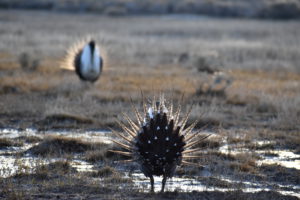
“This area contains some of the best habitat for sage grouse in Montana and the Northern Rockies,” said Mike Garrity, Executive Director of the Alliance for the Wild Rockies, a coplaintiff in the lawsuit alongside the conservation groups Native Ecosystems Council, Western Watersheds Project and Council on Wildlife and Fish. “Yet the BLM wants to burn down sagebrush to promote even more widespread grazing.”
The agency’s project in the Dillon Field Office of southwest Montana authorizes BLM to conduct up to 10,000 acres per year of intentional fires and tree cutting, and up to 1,000 acres per year of herbicide spraying, intensive targeted grazing, harrowing, raking, and seeding/planting for an unspecified number of years in undetermined locations. Despite this intensive project, the publicly available environmental analysis failed to disclose the potential locations of specific activities, the timeframe for the project, total acreages, and the potential impacts to sensitive wildlife species including the pinyon jay, sage grouse, pygmy rabbit, big game and whitebark pine.
This project is especially problematic for pinyon jays, whose recent population declines have caused the U.S. Fish and Wildlife Service to consider whether the species needs protection under the Endangered Species Act. Despite the precarious status of the pinyon jay, the BLM analysis for this project was grossly inadequate, staying completely silent on the impacts it may have on this struggling bird species.
“Pinyon jay populations have taken a nose dive — plummeting by over 85 percent in the last 50 years — as a result of habitat loss, due in large part to deforestation projects like this. If it is implemented, this project will exacerbate the population decline by destroying the very juniper trees that pinyon jays rely on to survive,” said Laura Welp, Vegetation Projects Specialist for Western Watersheds Project.
“The BLM also failed to disclose the baseline conditions for sage grouse, pygmy rabbit, whitebark pine, big game, and special status plant species in the Project area, instead deferring the collection of such data across upwards of 11,000 acres per year until after the Project is authorized and public involvement is over,” said Dr. Sara Johnson, Ph.D, Director of Native Ecosystems Council. “Without this information, BLM cannot actually determine how the Project will impact species and cannot credibly conclude that the Project will not have significant environmental impacts. The Bureau didn’t even consider reducing grazing despite its significant threats to sage grouse and sagebrush. This is just a continuation of the BLM’s ongoing program to destroy sage grouse and songbird habitat, but now it is on steroids.”
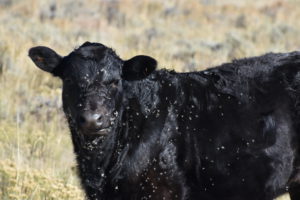
“By refusing to consider a reduced or no grazing alternative for any BLM actions in southwest Montana, the BLM effectively has effectively ensured that it will never consider reducing or eliminating livestock, despite acknowledging the well-documented harms grazing causes to rangeland health and wildlife,” said Steve Kelly, Director of Council on Wildlife and Fish. “Until livestock grazing is reduced in southwest Montana, the rangeland health standards that this Project is purporting to pursue will never be achieved.”
A copy of the complaint is online here. .
###