For immediate release: December 17, 2025
Media contacts:
- Chris Krupp, WildEarth Guardians, (206) 417-6363, ckrupp@wildearthguardians.org
- Erik Molvar, Western Watersheds Project, (307) 399-7910, emolvar@westernwatersheds.org
- Andrew Hursh, Advocates for the West, (208) 342-7024 x216, ahursh@advocateswest.org
Court Approves Plan to Revisit Livestock Grazing at Red Rock Lakes National Wildlife Refuge
Fish and Wildlife Service vows to reconsider ‘cattle grazing in general’ at Refuge established to protect largest wetlands complex in Greater Yellowstone Ecosystem
MISSOULA, Mont.— A Montana federal court judge issued a ruling this week granting the U.S. Fish and Wildlife Service’s plan to reevaluate its determination justifying livestock grazing at Red Rock Lakes National Wildlife Refuge in Montana’s Centennial Valley, to reconsider its grazing permit approach, and to reevaluate the environmental impacts of commercial cattle grazing at the Refuge. In response to a legal challenge from conservation organizations over the Service continuing to issue grazing permits that rely on a three-decades-old environmental analysis, the agency vows to collect new data and conduct new analyses, revisiting “cattle grazing in general on the Refuge.”
“The Fish and Wildlife Service has a duty to manage Red Rock Lakes to protect and preserve wildlife and habitat, but for decades it allowed ranchers to graze cattle on public land with little oversight and no consideration of the harm that grazing has had on the Refuge’s wildlife,” said Chris Krupp, Public Lands Attorney with WildEarth Guardians. “It’s unfortunate that it took a lawsuit from conservation organizations to get the Service to acknowledge that it’s been derelict in its duty. Now the Service must honor its commitment to the court to reevaluate whether cattle belong on this wildlife refuge and remove them if they don’t.”
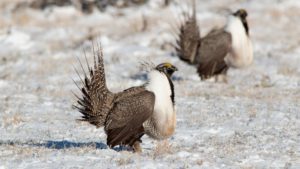
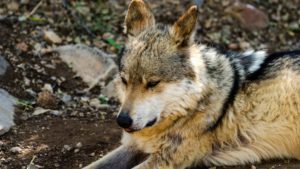
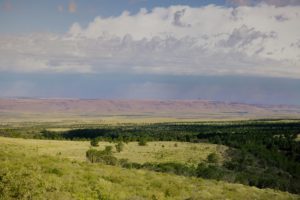
The Refuge was established by President Franklin Roosevelt in 1935 to protect the largest wetlands complex in the Greater Yellowstone Ecosystem. It is home to grizzly bears, wolves, wolverines, sage grouse, and more than one hundred other species of birds. The namesake lakes and their tributaries contain one of the last remaining native populations of Arctic grayling in the contiguous U.S. which reside in lakes and spawn in streams. Over the last decade, that population has declined from several thousand fish to just 73 fish in 2022.
At least as far back as 1994, the Service has recognized that livestock grazing poses a significant threat to the Refuge’s abundant wildlife. The Centennial Valley is a critical corridor for grizzly bears as they continue their expansion outward from Yellowstone. Despite the risks posed to grizzlies and other wildlife by the presence of livestock and long-standing recognition of grazing’s harmful impacts, the Service has continued to renew commercial grazing permits with little meaningful monitoring or analysis.
Represented by Advocates for the West, WildEarth Guardians and Western Watersheds Project sued the Fish and Wildlife Service in May 2024 for failing to ensure cattle grazing on the Refuge does no harm to wildlife. The Service admitted during court proceedings that it has never fully implemented the level of annual monitoring, analysis, and adjustments to livestock grazing set forth in its 1994 decision underpinning grazing permit authorizations. As a result, the agency moved to voluntarily revisit its livestock grazing plan for the Refuge.
“Fortunately, the Fish and Wildlife Service has recognized its failure,” said Andrew Hursh, Staff Attorney with Advocates for the West, who is representing the conservation groups. “Unfortunately, it took our lawsuit to get the Service to do the right thing. If the agency thinks it’s a good idea to let commercial ranchers run cattle on public lands in the National Wildlife Refuge System—which are set aside expressly for wildlife conservation—then their obligation under law is to adequately justify the need and environmental value of that activity, with accurate, up-to-date information, with scientific rigor, and with on-the-ground commitments to ensure conservation benefit. We’ll continue to push the agency to live up to its legal obligations and its own stated promises.”
While the Service’s decision authorizing the issuance of grazing permits is not vacated as conservation groups sought, through a multi-part plan to address grazing-related concerns on the Refuge, the agency proposes to conduct long-neglected monitoring of existing grazing through new methods, improving the quality of available grazing data and information through the collection and analysis of new data. Further, the Service plans to perform a new environmental analysis and determination of whether livestock grazing is even compatible with the Refuge’s purpose prior to the expiration of the current permits in two years, so that the permits may be modified or terminated.
“Despite National Wildlife Refuges being set aside solely for the protection of fish and wildlife, the Fish and Wildlife Service has allowed private, for-profit livestock producers to continually degrade the critically important habitats found across Red Rock Lakes,” said Patrick Kelly, Montana & Washington Director with Western Watersheds Project. “The Service’s repeated reauthorization of livestock grazing while failing to meet even the basic monitoring requirements necessary to prevent such damage is unacceptable. We will be keeping a close eye on the Service moving forward and will continue to monitor and document conditions on this ecologically unique Refuge.”
National Wildlife Refuges, unlike National Forests and public lands managed by the Bureau of Land Management, are not managed to favor extractive uses such as mining, logging and livestock grazing. Rather, the Service is required to manage National Wildlife Refuges for the conservation of fish, wildlife, and their habitats for the benefit of present and future generations of Americans. A commercial use, such as livestock grazing, may be permitted in some cases, but only after a formal determination that such a use is compatible with the mission of a refuge.